


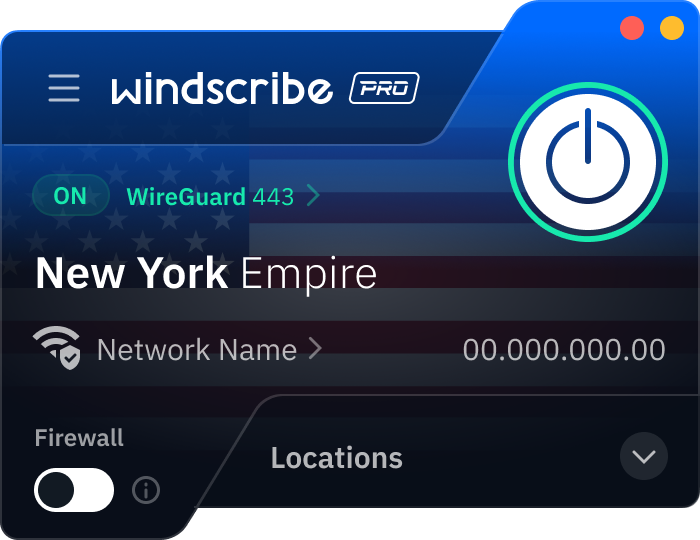
Step 1
Get the App
Step 2
Install the App
Step 3
Sign up
Why Use a VPN for New York
Claim a New York IP Address

Log Into New York Portals Anywhere

Stay In-Market for NY Sports
Watch Local TV Abroad

Run Geo-Targeted Testing

Secure Your Data in the Concrete Jungle

Encrypt Your Connection
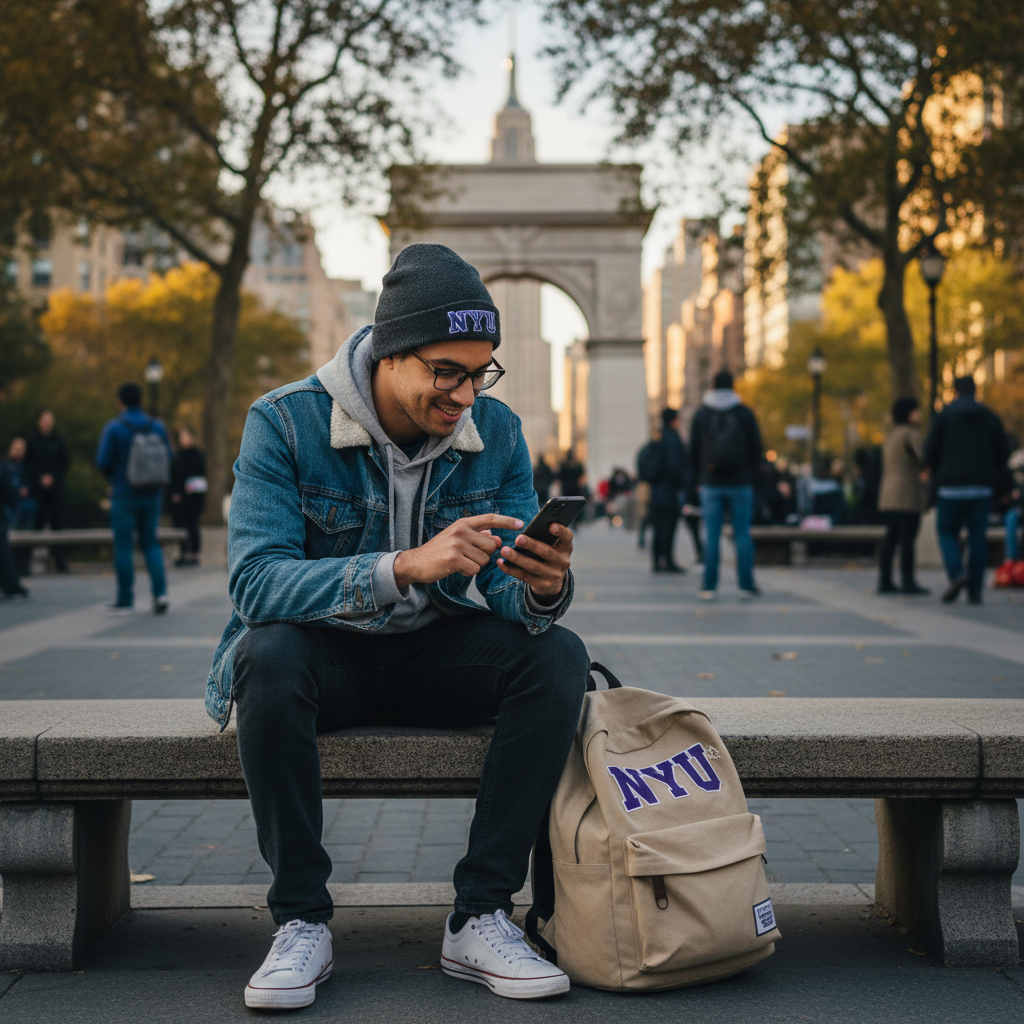
Browse Safely

Stay Secure on Free Wi-Fi



Loved & Trusted by Over 100 Million Users
Features

6 Encryption Protocols
Widest Server Reach
Most 10 Gbps Servers
Industry-Leading Ad Blocker
Privacy: Audited & Court-Proven
Features

Other VPNs
6 Encryption Protocols
Widest Server Reach
Most 10 Gbps Servers
Industry-Leading Ad Blocker
Privacy: Audited & Court-Proven
FAQs: Top Questions About New York VPN Answered
How do I change my VPN to New York?


Get Windscribe! Then, open the Windscribe app, go to our US server location list, and pick one of our servers in New York City or Buffalo. Hit Connect, then refresh whatever you’re using so it recognizes the new IP. And voilá!
How much does a VPN cost in New York?
VPN pricing isn’t really New York-specific. In general, most good paid VPNs cost about $2 to $15 USD per month, depending on the plan. At Windscribe, our plans start at $3 USD per month. To get a VPN for New York, check out our upgrade page.
Are VPNs legal in New York?
Yep, VPNs are totally legal in New York City, Buffalo, and across the state. And with New York’s privacy rules getting tighter in 2025-2026 (like the New York Privacy Act proposals), a lot of people use VPNs as an extra layer of protection to cut down on tracking and make it harder for data brokers to scoop up personal info. Just remember that a VPN is a privacy tool, not a “rules don’t apply to me” button, so anything illegal without one is still illegal with one.
Which VPN has servers in New York?
Windscribe does! We have physical VPN servers in New York City and Buffalo. We also offer global servers in 69+ countries and 135+ cities, solid privacy features that include a strict, independently-audited no-identifying-logs policy, browser extensions, and more.
Should NYU students and staff use a VPN on campus Wi-Fi?
If you’re on NYU Wi-Fi (or any shared network), a VPN is a solid privacy upgrade. It encrypts your connection, which helps keep things like school logins, email, cloud docs, and portal sessions harder to snoop on in dorms, libraries, cafés, and campus buildings. It’s also useful off campus when you’re bouncing between public Wi-Fi and hotspots and want your accounts to stay protected and less trackable.
Can I use a VPN browser extension in New York instead of the full app?
Yep! At Windscribe, we offer browser extensions for Chrome, Firefox, and Edge. They’re great for quick, browser-only privacy and fast location switching. Just note that browser extensions only cover what happens in the browser, so your other apps won’t be protected unless you use the full VPN app.
Does a VPN make online poker safer in New York?
Yes, but it primarily serves as a personal security layer rather than a legal workaround. Real-money online poker remains unregulated in New York, though lawmakers have reintroduced bills like SB 2614 to change this. Because no state-licensed platforms currently exist, many New Yorkers choose to play on offshore sites. Using a VPN like Windscribe on these platforms makes your experience safer by wrapping your connection in encryption, which is critical for protecting your login credentials, deposit details, and residential address from being intercepted on unsecured networks. However, you must be aware of the functional risks when using a VPN for gambling. Most major poker platforms, and nearly all regulated ones in neighboring states like New Jersey, use GeoComply technology to detect and block VPN use, ensuring players are in a legal jurisdiction. If a site's terms of service prohibit VPNs, using one can lead to your account being flagged, your funds being frozen, or a permanent ban. While a VPN is an excellent tool for general privacy and protecting your financial transactions from local snoopers, it is not a magic button for bypassing the complex geographical restrictions enforced by modern gaming sites.
How does a VPN affect The New York Times experience and privacy?
The New York Times (like most sites) uses location signals to tailor things like regional sections and ads. A VPN can make your location less obvious by masking your IP, which can reduce some location-based personalization. It can also help if a network blocks news sites, since filtering is harder when your traffic is inside an encrypted tunnel. And if you’re logging in or paying on public Wi-Fi, a VPN adds an extra layer of protection against Wi-Fi snooping.